Casino Venue Descriptions in Sóc Trăng: Reading the Details
Read casino venue descriptions in Sóc Trăng with care, separate stated activities from sales language, and identify what to confirm before making plans.
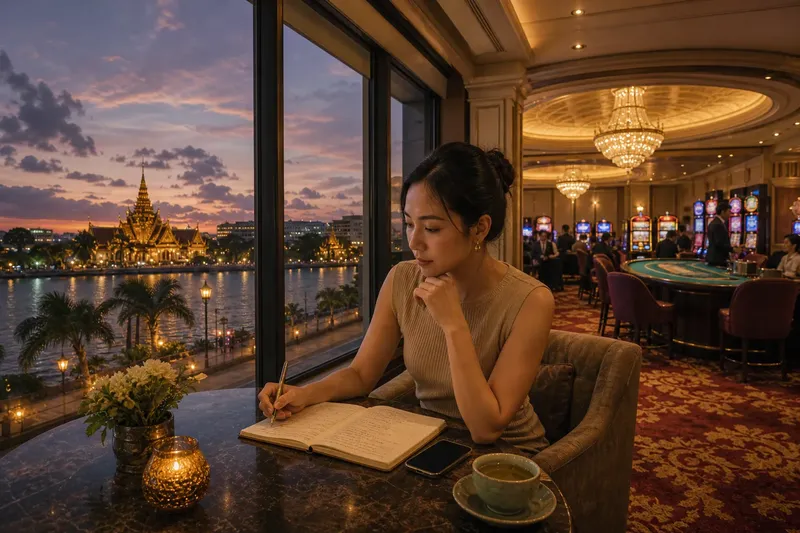
When a casino venue description in Sóc Trăng catches your eye, the useful question is what it lets you decide about your outing. A phrase such as “entertainment destination” may suggest a mood, but an itinerary depends on concrete details: what is offered, when it is available, and what visitors need to do.
Read a venue description as a planning document rather than a verdict on the experience. Separate the activity you might choose from the practical arrangements around it, then check whichever missing detail could change your plans.
Activities and facilities
A description may mention gaming, dining, a lounge or entertainment. Treat each as a separate possible activity: a dining area mentioned alongside games does not, by itself, confirm that meals are served during your intended visit.
Look for a named activity and an explanation of what visitors can do. If a page only uses a broad label such as “gaming”, ask which activities that means at that venue; the answer may shape whether the outing suits your interests.
Write down the one activity you would actually make the trip for.
Access and arrangements
Before setting out, check the venue’s current information for opening arrangements, entry conditions, identification requirements, booking details and any dress guidance. These are operational details, not clues to infer from a venue’s name, photographs or tone.
If an answer affects whether you can enter or take part, contact the venue directly and ask about your specific plan. For legal eligibility questions, consult authoritative local guidance; seek qualified advice for individual legal circumstances.
Planning checks
- Check whether the activity you want is named and explained; if it is, decide whether it fits your outing, and if it is not, ask the venue what is actually available.
- Check whether opening information applies to your intended day; if the venue confirms it, plan around that answer, and if it is unclear, verify directly before travelling.
- Check whether entry conditions are stated; if they are, compare them with your circumstances, and if they are missing or ambiguous, ask before making the trip.
- Check which identification, if any, the venue requests; if you can provide the specified document, continue planning, and if you cannot confirm what is accepted, contact the venue first.
- Check whether booking applies to the activity you want; if the instructions cover it, follow them, and if they do not, ask whether advance arrangements are needed.
- Check whether dining or entertainment is available at the time you intend to visit; if the venue confirms it, consider it as a separate part of your plan, and if not, arrange another option.
- Check whether dress guidance is explicitly stated; if it is, decide whether you can follow it, and if the page says nothing, ask rather than treating photographs as a dress rule.
Terms visitors ask about?
Does “exclusive” mean entry is restricted?
Not necessarily: the word may be used to create an impression rather than state an entry condition. Look for a clearly described restriction or ask the venue whether one applies.
What does “gaming” include?
The term can refer broadly to organised games or gambling activities, so it does not identify a particular option on its own. Ask for the activities available if the description does not name them.
Does a photograph confirm a facility is open?
A photograph shows an image, not necessarily the venue’s current service or schedule. Check current venue information or contact staff before building your plans around it.
Can an online listing settle booking questions?
It can provide useful instructions, but a listing may not answer whether they apply to the activity and date you have in mind. Confirm with the venue when the distinction matters to your plans.
A worked planning example
Imagine Lin, an invented visitor, has one evening in Sóc Trăng and wants dinner followed by a short visit to a venue described as an “entertainment destination”. Her starting plan has two activities—dinner and gaming—and one unresolved question: whether booking is needed for either.
She first writes down those two activities, then checks the description: it names gaming but gives no dinner schedule or booking instructions. She contacts the venue and asks whether dinner is served that evening, which gaming activities are available, and whether either requires a booking. Suppose, purely for this invented example, the venue confirms dinner is unavailable, names one gaming activity, and says no booking is needed for that activity. Lin’s resulting plan is to arrange dinner elsewhere and decide whether the named activity is worth visiting for; if the venue cannot confirm access or availability, she leaves that part of the evening unplanned rather than relying on the promotional phrase.
Make the description useful
When comparing casino venue descriptions in Sóc Trăng, compare practical details with practical details: named activities, access conditions and arrangements. Keep promotional wording separate, since adjectives do not settle what a visitor can do.
A concise note can help: record the activity confirmed, the arrangement still unclear and the person or source that can answer it. Recheck any detail that could change before you travel, especially access and availability.